Home Blog Page 37

The Best Businesswomen Awards reward women powering through!

Spectacular live return for Best Business Women Awards to celebrate greatest achievements of 2021

Hundreds gather from across the world for historical ceremony at Wembley – which returned to live format this October 

One of Britain’s most influential and respected women’s award ceremonies welcomed over 300 international attendees at the Hilton Wembley this October as the greatest business achievements of the year were celebrated in style. 

Returning to live format after going virtual in 2020, the seventh edition of the Best Business Women Awards paid tribute to female entrepreneurs from across the planet – acknowledging the best accomplishments during one of the most challenging years on record.

The glamorous gala was punctuated with live entertainment and saw people from Philadelphia to Spain in attendance – as 700 applicants were whittled down to 84 finalists. 

Every Gold and Silver winner was also given detailed comments by the panel of independent, trained and experienced business judges – which included Roma Bhowmick, Krishma Vaghela, Sharon Gaffney, Susan Barrett, Louise Yexley, Julie Grimes, Denise O’Leary, Lorraine Thomas and Justine Perry.

As well as showcasing and rewarding exceptional talent on a fittingly illustrious stage, the Best Business Women Awards provides a vital springboard for female entrepreneurs – putting their names on the map and boosting their profiles.

Previous winners have enjoyed significant press attention as a result of their accolades – appearing in local press and TV programmes on the BBC and Channel 4. 

Debbie Gilbert, founder of the Best Business Women Awards, said: “The past 18 months have been disruptive and uncertain. It has been difficult for every business owner in one way or another. 

“However, the sheer resilience of female entrepreneurs shone through, and this demonstrates the determination and tenacity of women in business who were not going to let a virus beat them.

“The appetite for awards has grown in recent years, with increasing recognition that these trophies offer validation for business owners. 

“Consumers will always choose award-winning businesses – and being given an accolade can be absolutely huge in terms of raising your profile.” 

Head Judge and business expert Roma Bhowmick added: “The standard of entry this year has been incredible. 

“The entries did not fail to impress and we had a difficult task shortlisting the finalists. 

“The entries really showed how much grit and determination these women have had during what has been the most challenging trading conditions for decades; I am immensely proud to recognise all winners.”

The Best Business Women Awards was one of the first ceremonies of its kind, set up seven years ago to recognise female entrepreneurs who’ve positively impacted clients, society and the local community. 

Entries have increased year on year – with over 5,000 applications since the first event back in 2015. 

Gold Winners at the most recent ceremony in London included ‘Most Inspiring Business Woman’ Kate Ball – whose Mini First Aid pitch won £50,000 backing from Sara Davies in Dragons’ Den – and ‘Best International Business Woman’ Elena Brennan, whose Philadelphia business Bus Stop Boutique is now a destination for fashionable shoes.

Other winners on the night were Olivia Mikhail – who scooped the ‘Best Business Woman in Animal Services’ award for her miniature pig business Kew Little Pigs – and ‘Best Boss’ Andrea Richards of Accounts Navigator Associates Ltd. 

The event’s return to live format in 2021 resulted in an amazing atmosphere – with the Rio Carnival group Star Dance and singers The Queen Beats lighting up the stage.

£4,500 was also raised from the annual raffle held in aid of the previous year’s Charity Champion Winner – with funds sent to the Santa Maria Foundation which supports young girls in Columbia. The organisation returned a message of thanks in the form of a video – which played at the event and proved a touching and emotional moment for the audience. 

Founder of the charity Lady Yomara Rodriguez Cardenas said: “I was so honoured and grateful for the recognition to win Charity Champion in 2020. 

“We are delighted with the sum raised, which is tremendously helpful, especially during this time.”

List of Gold Winners at the Best Business Women Awards:

●     Best Business Woman in Animal Services – Olivia Mikhail – Kew Little Pigs Ltd

●     Best Boss – Andrea Richards -Accounts Navigator Associates Limited

●     Best Business – Alexis Powell-Howard – Fortis Therapy & Training

●     Best Business Woman in Business Services -Suzanne Spicer-Spicer and Co Ltd

●     Charity Champion – Premila Puri- Be Kind Movement

●     Best Business Woman Working with Children & Families – Emily Aklan – Serenity Welfare Limited

●     Best Coach – Gitanjali Trevorrow-Seymour- High Definition You

●     Best Consumer Business – Vicky Grammatikopoulou – Vie Aesthetics

●     Best Customer Service – Vicky Grammatikopoulou – Vie Aesthetics

●     Best Business Woman in Financial Services – Sarah Siddons – Sarah Siddons Financial Planning

●     International Business Woman of the Year – Elena Brennan – BUS STOP Boutique LLC ( based in Philadelphia) 

●     Best Business Woman in Legal Services – Sarah Goulbourne -Gunnercooke LLP

●     Best Business Woman in Marketing and PR – Siobhan Stirling -Sharp Minds Communications

●     Most Inspiring Business Woman 2021 – Kate Ball -Mini First Aid 

●     Best New Business – Tonia Galati -TG Consulting Ltd 

●     Best Product – Monika Ludwiczak & Kintija Belska -Everlasting Brows

View the full list of Gold and Silver Winners at the Best Business Women Awards online. 

The Best Business Women Awards will reopen for applications in February 2022.

SOURCE

Non-Executive Director community hits 12,000 member milestone and eyes up USA expansion

The growth of non-executive support for companies, especially in the SME space has grown significantly in the UK in recent years. Some reports suggest there are now more than twice the number of non-executive directors sitting in UK boardrooms than there were just a decade ago.


One company that has done much to promote the use of non-executive directors is Virtualnonexecs.com; a UK based community of NEDs who work with over 20,000 companies to help them scale and grow.  Founder and CEO Ian Wright says “The most prohibitive thing for SMEs when considering a non-executive hire is not the incoming NED’s fees but rather the tens of thousands of pounds required by head-hunters to find them!”


Wright, credited with building one of the first free, open and searchable non-executive director websites back in 2012 says, “By removing the heavy recruiter fee, interaction with the non-executive community increases and by adding significant expertise and hindsight to a board, CEOs see an almost immediate improvement in their businesses performance”.


Virtualnonexecs.com was founded in 2019 as “The UK’s only peer-2-peer non-executive director community” with a focus on the SME market.  In October, it announced that they had hit a milestone of 12,000 active members.
But the story doesn’t end there.  Wright wants to expand the reach of Virtualnonexecs.com and intends to open an office in New York in Q1 of 2022.  He says, “I have built a significant number of high-level contacts in New York over many years and it seems a logical next step to take what we do across the pond.  There is a huge appetite for our service in the US and we already have almost one thousand members in America.”


But what drives this ambition?

He goes on to tell us, “When I sold my first company a decade ago, I saw first-hand the value well-connected NEDs can have on a business.  They bring a wealth of experience, knowledge and connections that my business, back then, simply could not have afforded in an executive capacity.  Non-Executives are often a fraction of the cost of their executive counterparts and whilst they do a very different job, non-executives can have huge material impact, especially if the founder has an eye on their eventual exit.”


Transaction rich source of data

He tells us that the non-executive market is one of the most “active and interesting” arenas for any corporate finance focused business.  “Why do companies hire non-executives?  In short, there is a corporate governance angle, sure.  But the vast majority are transaction orientated; they are founders who are building teams to take the business through various stages of growth and potentially IPO, trade sale or MBO.  It is why the Private Equity and VC communities are so interested in this space” he says.


“In the last twelve months our membership has helped thousands of businesses in their non-executive capacity.  From working with founders in tough situations to raising millions in various rounds of fund raising, they are plugged in boardrooms up and down the UK.”


The future
With 12,000 members and an active pipeline of deals hitting the Virtualnonexecs community, Wright is confident that the growth will speed up in 2022.

SOURCE

The Importance of Pregnancy Loss Policies and Why Every Business Should Adopt One

With many high-profile figures speaking out about their experiences of miscarriage, we’re talking more and more about the reality of losing a baby. However, pregnancy loss is still a subject that falls under the radar, especially when it comes to workplace policies. With the release of the new documentary this October, Myleene Klass: Miscarriage & Me, there’s no better time to talk about the importance of pregnancy loss policies.

With that in mind, let’s find out more about the pregnancy loss policies here in the UK and what we could be doing better.

What are the current pregnancy loss policies?

Although celebrities such as Myleene Klass, Katherine Ryan and Stephanie Davis are working hard to break the stigma around miscarriage and speaking out about it, the UK’s policies have a long way to come. In March of this year, New Zealand passed a monumental law entitling parents to take three days bereavement leave if they go through a miscarriage or a stillbirth (no matter what stage the pregnancy was at). Here in the UK, however, there is no entitlement to any paid leave when the loss occurs before 24 weeks. Technically, UK law doesn’t recognise anything before 24 weeks as “childbirth”. Therefore, employees don’t have any legal right to time off work, even if the time is to be taken for bereavement.

After 24 weeks of pregnancy, however, the rules change a little. Since April 2020, parents have had the legal right to take time off work for “statutory parental bereavement”. This applies if parents have suffered the death of a child, including a miscarriage or a stillbirth after 24 weeks. However, this Baby Loss Awareness Week we’re asking: does this law go far enough? The emotional and physical trauma that can accompany a miscarriage should not be underestimated. It’s simply not as easy as getting up and going to work the day after such a heartbreaking ordeal.

This year, some companies have recognised this and put some big changes in place. Channel 4 and Monzo are among the first few brands to have implemented policies specific to miscarriages. These companies now offer both parents up to two weeks of paid leave after a pregnancy loss.

Why is it so important that more companies follow?

In light of the pandemic, companies everywhere know more than ever how important health and wellbeing is to their employees. Compassion and understanding are also key in maintaining a strong and happy workforce. With so many people having to endure the pain of pregnancy loss, a compassionate approach from companies is the only way forward.

According to research by Imperial College London, around 250,000 miscarriages happen in the UK every year. In addition to this, there are around 11,000 emergency ectopic pregnancy admissions each year. The same study revealed the consequences that these tragedies often have on women’s mental health. It was found that almost a third of women who experienced either a miscarriage or an ectopic pregnancy later suffered from post-traumatic stress disorder. Anxiety and moderate-to-severe depression were also frequently reported amongst those who had been through a miscarriage. Another study which was carried out by Tommy’s National Centre for Miscarriage Research revealed that approximately one in four women would go through at least one miscarriage in their lives.

Evidently, miscarriages are more common than many people might think. The taboo around the topic of pregnancy loss has meant that this subject has too often been ignored. However, with more awareness, we should also see better policies in place for women who have had to go through such a difficult experience.

What can be done?

Although there are currently no laws in place about workplace leave after pregnancy loss, there are plenty of ways in which companies can take matters into their own hands. Like Monzo and Channel 4, it’s a great option for other companies to introduce their own formal policies. This way, people who have had to go through the pain of pregnancy loss will feel financially and emotionally supported by their workplace. That’s not the only thing that companies can implement either. There are plenty of other ways to make sure employees feel supported and heard, such as:

  • Raising awareness about pregnancy loss and tackling the taboo.
  • Making sure your staff have access to useful information sources about pregnancy loss.
  • Offering compassionate leave and mental health days.
  • Training managers and other members of staff about how to support people who have been through pregnancy loss.
  • Offering flexible working options for those who have been through pregnancy loss.

We’re certainly heading in the right direction when it comes to pregnancy loss policies and greater awareness, with public figures tackling taboos about subjects from miscarriage to postpartum depression and postpartum bleeding. However, there is still much to be done. Following this year’s Baby Loss Awareness Week, don’t shy away from the subject. Reach out to your loved ones who might be suffering and help to implement new policies in your workplace.

Sources

https://www.kingsleynapley.co.uk/insights/blogs/employment-law-blog/leading-the-way-its-time-for-action-on-pregnancy-loss#:~:text=The%20current%20legal%20position%20in%20the%20UK&text=There%20is%20no%20legal%20entitlement,annual%20leave%2C%20or%20unpaid%20leave.

https://www.peoplemanagement.co.uk/experts/advice/why-employers-introducing-miscarriage-policies#gref

https://www.michelmores.com/news-views/news/new-zealand-brings-miscarriage-leave-%E2%80%93-should-uk-follow-suit#:~:text=New%20Zealand%20has%20recently%20introduced,type%20of%20leave%2C%20alongside%20India.

https://www.stylist.co.uk/entertainment/tv/miscarriage-and-me-myleene-klass/571636

https://www.refinery29.com/en-gb/paid-leave-after-pregnancy-loss#:~:text=Channel%204%20and%20digital%20bank,a%20miscarriage%2C%20abortion%20or%20stillbirth.

https://www.refinery29.com/en-gb/paid-leave-after-pregnancy-loss#:~:text=Channel%204%20and%20digital%20bank,a%20miscarriage%2C%20abortion%20or%20stillbirth.

https://www.theguardian.com/world/2021/mar/25/new-zealand-miscarriages-stillbirths-bereavement-leave

The European $1billon company CM.com continues to expand in the UK

Few companies have experienced the growth rate enjoyed by CM.com over the past 18 months, with the company earlier this year achieving the coveted status of European “Unicorn” and a market cap of over $1bn. 

Driving this growth is CM.com’s entrepreneurial desire to continue iterating on its product stack, whilst expanding operations across the globe, with specific focus on its regional development including the UK and Ireland.

The Dutch listed company is billed as the leader in “conversational commerce”, a phrase coined to define the modern way in which customers interact with companies through differing digital channels such as WhatsApp, SMS, Chatbots, and voicebots. CM.com’s ability to help companies streamline customer engagement has led to several new client wins, with such coveted names as American Express, Cancer Research UK, and Coca-Cola, all benefiting from CM.com’s technology to support and innovate their customer service experience.

“Every sector has been affected by the pandemic in one way or another over the past 18-months, especially businesses that sell products or services directly to consumers. Managing the huge uplift in customer enquiries relating to event cancellations, travel changes, or online orders has put enormous pressure on contact centres. Businesses are now coming to us looking for help to give their customers the ability to contact them in the way the customer wants, whilst automating as much of the engagement process as possible to reduce the workload on call centre operatives”, commented James Matthews, UK and Ireland Country Manager for CM.com.

CM.com sees the UK and Ireland market as a one of their growth areas demonstrated by continued investment to expand its London and Cork teams, with dedicated divisions now focussed on specific sectors such as Music & Live, Sport & Entertainment, Hospitality, and eCommerce. Many of these sectors have been badly hit by the recent crisis, and CM.com can play an important part in helping affected companies to build back better.

“The past two years have been the most challenging time for businesses within the live entertainment sector, with most companies completely mothballed for months whilst the lockdowns were enforced. Now, as we emerge and begin to reopen live events, we have a unique opportunity to change the status quo, integrate technology to help take the heavy lifting away from manual customer engagements, and to give customers the ability to interact with companies through their natural and preferred methods of communication”, James Matthews commented. 

There’s no doubt CM.com is investing heavily in these sectors; they were the event supporter of the recent Formula 1 Heineken Dutch Grand Prix, and provided the technology infrastructure for ticketing, customer support and in-event payments. Last month they were a key sponsor of the Sport Industry Awards in London.

Having recently moved to a dedicated office overlooking St Katherine’s Dock, the UK and Ireland headcount is set to expand over the next 12 months, with a 25% uplift on top of the 50% employee headcount growth they experienced in 2020 to 2021. 

“Attracting the right talent to CM.com is vital to our continued success. Whilst some of our competitors were scaling back their operations over the past 18 months, we saw it as an opportunity to invest in people and recruited entire teams from companies that laid-off large sections of their workforce during the pandemic”, commented Matthews.

This recruitment strategy certainly puts CM.com in good stead during what is widely reported as a staffing shortage across the UK & Ireland. Demonstrating such growth metrics over the past 18 months will only serve to position CM.com as an attractive employer during what is still a relative time of uncertainty. 

SOURCE

MERCEDES-BENZ SOUTH WEST COMPLETE EXPANSION IN ESTOVER, PLYMOUTH

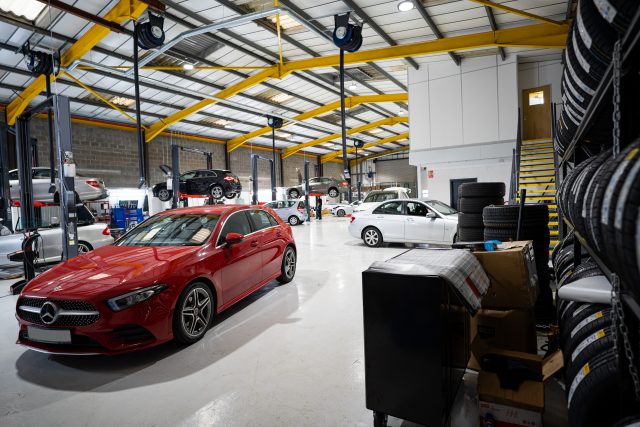
Mercedes-Benz South West have successfully expanded its workshop facility adjacent to the existing Light Commercial Vehicle (LCV) Centre located in Estover, Plymouth. The family-run franchise which possesses multiple sites located across Devon, Cornwall, and Somerset, has acquired a space previously used by DPD to fulfil the expansion.

Following numerous lockdowns over the past 2 years, the need for vans has grown due to the popularity of online retail and the requirement for more courier and delivery services across the region. Following this demand Mercedes-Benz South West has seen visit numbers to the after sales divisions increase by 18% compared to last year and 22% in 2019. Mercedes-Benz South West can now accommodate that growing demand from those looking to keep their van safe and maintained following the boost in van sales. Furthermore, Mercedes-Benz South West will also utilise this new space by undertaking more Passenger Car servicing, adding more convenience for customers in the local area. Passenger Car servicing will now take place at both the Plymouth Showroom site, in Derriford, as well as the new facility in Estover, Plymouth.

Since the expansion was completed, Mercedes-Benz South West have recruited many professionals from the local area. The expansion continues to bring new job opportunities with roles nearly always available due to consistent growth. Vacancies currently being hired for include LCV Technicians (x2) and a Passenger Car Vehicle Technician.

Lee Nash, After Sales Director at Mercedes-Benz South West comments:

“We are immensely proud of what we have achieved here at our LCV Centre in Plymouth. Our team has worked extremely hard over the last 2 years to firstly support our customers since the pandemic began, and secondly to complete an expansion. This expansion enables us to offer both our Light Commercial Van customers and our Passenger Car customers more support with their servicing and maintenance needs. We’re delighted that as a result we are also offering more employment opportunity to the local area.”

SOURCE

The Three Industries Experiencing a Technological Revolution

If we asked you to think of an industry that has been revolutionised by technology, you’d probably have no problem answering. In fact, the more difficult question might be naming an industry that hasn’t experienced digital transformation, particularly in the past year.

It’s clear that some industries are more technologically advanced than others. Naturally, technology businesses including Apple, Microsoft, and Google are leading the way. Media, financial services, and energy providers are some of the most digitised sectors.

Some sectors, meanwhile, are still in their digital infancy. But that’s about to change. Here, we detail three sectors that are on the cusp of a digital revolution.

Haulage benefits from connected digital systems

There will never be a scenario where we don’t rely on haulage and transport companies. These businesses proved to be a vital source of support for us all during the coronavirus pandemic. With many stores closed as the result of multiple national lockdowns, the public turned to online shopping, and we aren’t looking back. An Accenture survey found that this shift will continue in the long term as consumers see the benefit of shopping online.

This increased demand has massively impacted the sector. Hauliers which had already embraced digital technologies had a head-start. These industry leaders were able to take advantage of this increased demand for their services, using cloud systems to allow staff to work remotely and mobile technology to keep their wheels turning. Operators in sub-sectors including refrigerated food were essential to keeping the UK running during the initial national lockdown. However, businesses that hadn’t embraced digital didn’t have the same advantage as sector leaders.. [TW1] [NB2] Those serving the events, manufacturing, and catering sectors suffered an unavoidable drop in business.

The sector has historically been slow to adopt digital technologies. PwC’s latest sector report revealed that only 28% of businesses rated themselves as “digitally advanced”. But the technologies that are currently shaping the sector, including artificial intelligence, the cloud, blockchain, and robotics, are set to give the industry an incredible boost.

However, digital innovation doesn’t always have to come in the form of AI and robotics. In fact, this blue-sky thinking can cause executives to miss the most effective technologies right in front of them. Back-office systems including transport management solutions and logistics software can help businesses get a bird’s-eye view of their operational and financial performance and significantly increase productivity. A number of businesses in the sector report huge cost and time savings as a result of implementing these sector-specific digital solutions, which allowed them to go mobile and paperless. Others have deployed cloud-based [NB3] solutions to allow them to manage their business growth effectively and keep teams working remotely, which is essential for a future society in which we rely on haulage more than ever before.

Healthcare takes advantage of AI and interoperability

The coronavirus pandemic also impacted the way we take care of our health. Many GP practices switched to remote phone or video appointments in order to reduce the risk of spreading the virus in the surgery. A plethora of mobile apps, including Patient Access and the NHS app, are now available to help alleviate pressure on the NHS and allow patients to self-serve and book GP appointments, order repeat prescriptions, and access their medical records.

We’re also seeing advancements in the diagnosis and treatment of a number of illnesses and conditions. Artificial intelligence is being tested in the detection and diagnosis of strokes to significantly reduce the long-term impact of strokes on a patient. Furthermore, Microsoft’s InnerEye technology is paving the way for automation in cancer treatment. The tool identifies lesions and tumours in body scans, automating a once-manual task and allowing NHS staff to speed up cancer treatments.

The NHS is also looking to build on its current successes with artificial intelligence by announcing the second round of the AI in Health and Care Award. Winning projects from the first round are currently being tested, and include a mobile app that uses urine samples to detect the early signs of kidney disease.

A current project which is set to revolutionise the NHS is the refresh of its legacy back-office systems. This was highlighted to the public when the WannaCry ransomware attack was able to successfully take down multiple NHS authorities because of its outdated technologies. A key focus for this project, in addition to strengthening the service’s cyber-security, is interoperability. This will allow key systems to share critical data effectively and securely. This project will also help the NHS improve key processes including the discharge of patients from inpatient care and mental health facilities, managing A&E operations, and medication prescriptions and application.

Manufacturing explores machine learning and robotics

The manufacturing sector has arguably experienced the biggest digital revolution of all time. Items that were once handmade are now fully automated, changing the landscape of the sector but also the job landscape. Now, the sector is making strides in exploring how humans and robotics can work together.

Machine learning is set to speed up the process of manufacturing materials like metallic alloys for aerospace, making the process more cost-effective and therefore more profitable. According to Deloitte, machine learning can improve the quality of a product by up to 35%. This machine learning is also being used to optimise the output of heavy manufacturing machinery, allowing the devices to run in auto-pilot mode and thus enabling manufacturers to produce products 24/7 with minimal to no supervision.

The sector is also uniquely positioned to benefit from the Made Smarter Adoption programme. The government initiative is designed to help businesses embrace digital technologies, modernise their operations, and create new jobs. For many, a lack of resources, guidance, and capital have been barriers to digitisation, and this programme is designed to help businesses in the manufacturing sector overcome these hurdles.

We’ve all witnessed how much technology has positively impacted businesses. There isn’t a single sector in the UK that hasn’t benefitted from digital technologies, but there are sectors whose uptake is slower than expected. Happily, many of these sectors are currently on the cusp of realising the potential of digital.

Sources

https://www.accenture.com/_acnmedia/PDF-137/Accenture-Debunking-Consumer-Myths-COVID.pdf#zoom=40

https://www.pwc.com/gx/en/transportation-logistics/pdf/the-future-of-the-logistics-industry.pdf

https://www.forbes.com/sites/louiscolumbus/2019/08/11/10-ways-machine-learning-is-revolutionizing-manufacturing-in-2019/?sh=707b50d82b40

https://www.madesmarter.uk/support/business-growth-advice/

https://www.theengineer.co.uk/made-smarter-technology-accelerator-industry-four/

https://www.gov.uk/government/news/8-million-government-boost-for-manufacturers-across-england-to-go-digital

https://www.england.nhs.uk/digitaltechnology/connecteddigitalsystems/interoperability/

https://www.england.nhs.uk/digitaltechnology/connecteddigitalsystems/

https://www.nhsx.nhs.uk/news/nhs-begins-new-search-ai-tools-save-lives-and-improve-care/

https://www.forbes.com/sites/forbestechcouncil/2019/02/05/10-industries-on-the-cusp-of-technological-disruption/?sh=5f7590c05d47

https://www.eurekamagazine.co.uk/design-engineering-features/technology/ai-a-manufacturing-revolution/235219/

https://www.medrxiv.org/content/10.1101/2020.07.02.20143834v1.full.pdf+html


 [TW1]Many businesses didn’t have any work, not through their fault, but many businesses were closed. It’s unfair to say they weren’t able to effectively manage their fleets and unable to step up the plate. If they didn’t operate in the sector eg. not refrigerated freight there was no work. Need to be careful saying things that aren’t strictly true unless we can back up with industry reports.  Could we not say, something along the lines of operators using cloud systems were able to keep staff working remotely and those using mobile technology adapted quickly to keep their wheels turning….putting a positive spin on it?

 [NB2]Have implemented your recommendation 😊 but we still need to make a causal link between a lack of tech adoption and businesses struggling – hopefully this is a more positive way of putting it? </