Home Blog Page 6

Rixos Adds to Its Hurghada Offer With New Premium Resort as British Demand for Red Sea Breaks Rises

More than one million British travellers visit Egypt each year, and the UK holds its place as one of the country’s key European source markets. Egypt is recording high international visitor numbers, and British demand for premium Red Sea stays has increased in line with that growth. Rixos Hotels Egypt has opened Rixos Premium Magawish Bay View, its second resort in Hurghada, to address that demand.

British travellers can fly direct to Hurghada from London, Manchester, Birmingham, Bristol and Glasgow. The destination offers year-round sun, sandy beaches, and a strong all-inclusive market that suits the preferences of many British holidaymakers.

The new Rixos Premium Magawish Bay View sits next to Rixos Premium Magawish Suites & Villas and applies the brand’s Ultra All-Inclusive concept to a new setting. It features contemporary architecture, a varied dining programme, and extensive lifestyle facilities.

Hurghada International Airport is seven kilometres from the resort, which sits on the Red Sea coast with direct access to clear waters and sandy beaches.

An Important Milestone in Our Red Sea Growth Vision

Commenting on the opening, Erkan Yildirim, CEO of Rixos Hotels Egypt, said:

“Rixos Premium Magawish Bay View represents an important milestone in our growth vision for the Red Sea. We strongly believe in Hurghada’s growing position within international tourism and continue to view the region’s potential through a long-term perspective. At Rixos, we go beyond resort operations by creating destination experiences that bring together gastronomy, entertainment, sports, wellness and lifestyle. With Rixos Premium Magawish Bay View, we are proud to contribute to Hurghada’s journey towards becoming one of the world’s most preferred resort destinations.”

A New 442-Key Luxury Resort on the Red Sea

Rixos Premium Magawish Bay View features 442 accommodation units, including premium rooms, spacious suites and private villas.

Designed to meet the expectations of today’s luxury traveller, the resort combines smart-room technology with contemporary interiors. Accommodation options include suites of up to 240 square metres, while the signature Skyline Suites offer expansive terraces, private pools and panoramic views across the Red Sea.

Among the resort’s standout facilities are nine swimming pools, including an Infinity Pool overlooking the coastline, as well as direct marina access. Guests can enjoy a wide range of water-based activities including paddleboarding, water skiing and kitesurfing, while an on-site equestrian centre offers horseback riding experiences along the Red Sea shoreline. For those seeking greater privacy and personalised service, the resort also features 17 private pool villas.

A Culinary and Lifestyle Destination

Food and beverage play a central role in the guest experience at Rixos Premium Magawish Bay View.

Alongside the international buffet offering at Turquoise Restaurant, guests can choose from a collection of speciality restaurants including Casa Fiesta, inspired by South American cuisine; Peruana; Indian restaurant Rasa; Italian venue L’Olivo; and Mykonos, which celebrates Mediterranean and Greek flavours.

The resort’s lifestyle offering includes Azure Lounge, Infinity Pool Bar, The Gin Time and Society Lounge, while Anjana Spa provides a range of traditional hammam rituals, wellness treatments and massage therapies.

Creating One of Hurghada’s Most Comprehensive Resort Experiences

Guests staying at Rixos Premium Magawish Bay View also benefit from access to the restaurants, sports facilities, entertainment venues and lifestyle experiences available at neighbouring Rixos Premium Magawish Suites & Villas.

Together, the two resorts create one of the most comprehensive luxury resort offerings in Hurghada, delivering an extensive range of experiences within a single destination.

Building on the Success of Rixos Premium Magawish Suites & Villas

Since opening in 2021, Rixos Premium Magawish Suites & Villas has established itself as one of Hurghada’s leading upper-upscale resorts. With its prime Red Sea location, villa-focused accommodation concept and high service standards, the property has earned strong recognition among international travellers.

In 2025, Rixos Premium Magawish Suites & Villas ranked fourth globally in its category in HolidayCheck’s list of the world’s most popular hotels, further reinforcing its reputation for guest satisfaction and service excellence.

With the opening of Rixos Premium Magawish Bay View, Rixos Hotels Egypt continues to respond to growing demand from the UK and wider European markets while supporting Hurghada’s position as one of the Mediterranean region’s most sought-after premium resort destinations.

Contact: Ali Sacli
ali@joinpr.com.tr

Spreadsheets vs ERP: When It’s Time to Upgrade Your Business Systems

Most companies don’t plan to outgrow their spreadsheets. It just happens.

One day everything’s running fine — a shared Excel file here, a Google Sheet there. Then suddenly you’ve got three departments working off different versions of the same data, and nobody can agree on what the actual inventory numbers are. That’s when business systems become less of a nice-to-have and more of a survival question.

Here’s the thing: spreadsheets aren’t bad. They’re genuinely useful for quick analysis, short-term tracking, smaller admin tasks. The problem isn’t the tool — it’s asking the tool to do a job it was never designed for.

Where Spreadsheets Start to Break Down

The cracks usually appear quietly. A formula gets broken. Someone saves over an old file. Finance is working off numbers from Tuesday while sales is looking at Thursday’s version.

Manual spreadsheets depend entirely on people updating them accurately — every time, under pressure, during busy periods. That’s a fragile system. Small errors compound fast, and by the time anyone spots the discrepancy, it’s already affected three downstream reports.

Version control is a particular headache. Multiple people accessing shared files simultaneously creates a mess that most businesses handle through sheer willpower and colour-coded tabs. It works. Until it doesn’t.

The deeper issue? Different departments end up operating in silos. Sales has their numbers, finance has theirs, inventory’s got a third set — and they don’t always match. Decisions get made on incomplete pictures. That reduces confidence fast.

What ERP Actually Fixes

An ERP centralises everything. One version of the data, updated automatically, accessible across departments simultaneously. Finance, procurement, inventory, customer management — all pulling from the same source.

That sounds simple. The impact isn’t.

Teams stop spending half their day cross-checking figures. Information flows without manual handovers. When someone in inventory updates stock levels, sales sees it immediately — no waiting, no reconciliation, no “which file is current?”

Real-time visibility changes how fast teams can respond. Spotting a supply issue on Wednesday instead of Friday isn’t a minor improvement — in high-volume operations, that’s the difference between a manageable problem and a crisis.

Platforms like Microsoft Dynamics 365 Business Central are built specifically for growing mid-market businesses navigating exactly this transition. Working with experienced Business Central consultants helps companies move from fragmented manual processes to connected systems without the implementation chaos that derails so many upgrades.

Growth Exposes the Gaps

Here’s where it gets interesting: business systems that worked fine at £2M revenue start showing strain at £10M. New suppliers, larger order volumes, more SKUs, additional locations — complexity compounds. Spreadsheets don’t scale with that gracefully.

ERP platforms do. That’s fundamentally what they’re designed for.

Scalability matters beyond just handling more data. It means finance, sales and procurement teams can grow without proportionally growing their administrative workload. The system absorbs complexity so people don’t have to.

The Decision-Making Angle

There’s an executive dimension here worth addressing.

Strategic decisions require reliable data. When reporting depends on manually compiled spreadsheets, leadership ends up making calls based on information that’s days old and possibly inconsistent. Forecasting becomes guesswork. Trend analysis loses credibility.

Connected business systems give executives live dashboards — real profitability metrics, margin data, project costs — without waiting for someone to pull a report together. That changes the quality of decisions at the top, not just the efficiency of operations in the middle.

Margin leakage, capital allocation issues, overhead creep — these show up clearly in ERP reporting. In spreadsheets, they hide.

So When’s the Right Time?

No universal answer. But the signals are pretty clear: reporting delays becoming routine, departments working off conflicting data, staff spending significant time on manual reconciliations, growth creating administrative strain rather than just operational volume.

If two or three of those sound familiar, the answer’s probably now.

The businesses that plan the transition thoughtfully — rather than waiting until the wheels fall off — come out the other side with systems that support where they’re going, not just where they’ve been.

MODULE-T creates UK company to serve British clients from a local base

MODULE-T has set up a dedicated British operation, MODULE-T UK, to handle sales and client support in the UK market. The company has been expanding across Europe and sees the UK as a significant area of growth, with demand coming from businesses and public bodies that need temporary or permanent structures installed without lengthy construction programmes.

With over 15 years in the modular building sector and a supply history covering more than 120 countries, MODULE-T offers a range that includes portable office cabins, sanitary and WC units, changing rooms, storage containers, flat-pack cabins and prefabricated modular buildings for a wide range of applications.

Flexible solutions help partners optimise their estates

As organisations increasingly look for ways to manage and optimise their estates more efficiently, MODULE-T UK aims to position itself as a trusted partner delivering reliable, high-quality modular infrastructure solutions tailored to the operational realities of the UK market. Combining scalable off-site construction methods with adaptable design, the company’s modular approach supports organisations seeking greater operational flexibility, faster deployment and dependable project delivery.

“The launch of MODULE-T UK represents an important milestone in our international development strategy,” said Yigit Ozdemir, Regional Sales Director at Module-T. “Having a dedicated presence in the UK allows us to work more closely with our clients and support them as a long-term solutions partner providing reliable, high-quality modular infrastructure specifically tailored to their operational requirements.”

Modular design is on the rise

The launch comes as modular and off-site construction continues to become increasingly established across the UK construction sector. Permanent modular buildings now represent the largest and fastest-growing segment of the market, as companies seek faster delivery timelines, greater certainty around quality and more efficient use of resources. Across both public and private sectors, modular construction is increasingly viewed as a proven infrastructure solution in its own right rather than an alternative to traditional building methods.

Government housing targets, rising material costs and ongoing shortages in skilled labour are also accelerating the adoption of modern methods of construction across the UK representing a sizeable USD 15 billion according to Mordor Intelligence. For contractors, industrial operators, municipalities and infrastructure developers, off-site construction is becoming an increasingly practical way to deliver scalable facilities with reduced disruption and greater predictability.

A structure dedicated to UK

MODULE-T UK will focus on delivering tailored solutions for contractors, industrial operators, construction companies, municipalities, event organisers and public sector clients seeking reliable and scalable modular infrastructure.

The company says the creation of a dedicated UK structure will improve responsiveness, strengthen customer support, and enable closer collaboration with British partners on projects requiring rapid and flexible deployment. Combining international manufacturing expertise with local market engagement, MODULE-T UK aims to support a broad range of operational requirements, from workforce accommodation and site offices to sanitary facilities and modular workspaces.

How Insolvency World Helps Directors Understand Their Options Before It’s Too Late

Woman worried about financial problems. Jobless or to many bills

When cash is tight and creditors are getting louder, it’s easy for directors to focus on getting through the week and postpone bigger decisions. But distress rarely arrives overnight. There are usually warning signs that a company is moving from manageable pressure to a point where options narrow quickly.

Insolvency World is often used by directors and finance leads at this stage, not to be sold as a solution, but to understand what the main routes mean in plain English and what tends to happen next. The earlier you get clear on your position, the more control you usually keep.

The Warning Signs That Tell Directors Time Is Running Short

Most businesses hit rough patches. The difference is whether the business can recover without building a hidden backlog of debt, missed obligations, and broken supplier trust.

Common signs the situation is becoming critical include:

  • HMRC arrears that keep rolling from one month to the next, especially VAT and PAYE
  • Using one creditor’s money to pay another, or relying on last-minute transfers to meet payroll
  • Supplier terms tightening, losing key suppliers, or being moved to pro forma
  • County Court judgments, statutory demands, or letters referencing a winding up petition
  • A shrinking order book, falling gross margins, or projects becoming loss-making
  • Directors injecting funds repeatedly without a credible route back to stable trading
  • Bounced payments, daily bank balance monitoring, or agreed overdrafts being withdrawn

None of these automatically means the business is beyond help. They do mean it’s time to stop guessing and start checking the numbers properly.

What “Insolvent” Means In Practice

Directors often associate insolvency with liquidation. In reality, insolvency is a test of whether the company can pay its debts when they fall due, or whether its liabilities outweigh its assets.

Two practical tests are often discussed:

Cashflow Insolvency

This is when the company cannot pay debts as they fall due. It might show up as persistent late payments, arrears, or pressure from HMRC. A company can be cashflow insolvent even if it has valuable assets on paper.

Balance Sheet Insolvency

This is when the company’s liabilities are more than its assets. It can happen quietly, especially where stock values are optimistic, bad debts build up, or loans are understated.

Once insolvency is a realistic risk, decisions should usually be taken with creditors in mind, not just shareholders. This is where directors can feel exposed, particularly if the business continues trading without a plan.

Creditor Pressure And Winding Up Petitions: Why Speed Matters

Creditor pressure tends to escalate in stages. You might start with chasers and demands, then move to collection activity, then formal action.

A winding up petition is a court application to close a company because it can’t pay its debts. It is serious, but it’s also a process with steps and timelines. The risk is that directors wait until the last moment, by which point choices may be limited.

Potential consequences, depending on the case and timing, can include:

  • Bank account restrictions or freezing once a petition is advertised
  • Loss of customer confidence if the petition becomes public
  • A move towards compulsory liquidation if the court makes a winding up order

If a petition is threatened or issued, it’s usually sensible to get urgent professional input. The right response depends on the debt, the company’s solvency, the presence of secured creditors, and whether a restructure is realistic.

The Main Formal Options Directors Usually Consider

When directors hear terms like CVA, administration, and liquidation, the language can make everything feel more final than it is. Each route has a purpose, and each has trade-offs.

Company Voluntary Arrangement (CVA)

A CVA is a formal agreement with creditors to repay some or all debts over time, typically from future trading profits. It may allow a viable business to continue, but it’s not a guaranteed rescue route.

A CVA tends to work best when:

  • The core business is profitable, but historic debt is the drag
  • Management information is reliable and cashflow forecasting is credible
  • Key creditors are likely to support it, or at least not actively oppose it

It can fail if forecasts are unrealistic, if trading deteriorates, or if creditor support isn’t there.

Administration

Administration is designed to protect a company while a plan is put in place. An administrator is appointed to manage the process and act in the interests of creditors.

Possible outcomes may include:

  • A sale of the business and assets
  • A restructure, sometimes with a move into a CVA
  • If rescue isn’t possible, an orderly wind-down leading to liquidation

Administration is not the same as liquidation, but it is a formal insolvency procedure and it changes who controls the company.

Company Liquidation (Voluntary Or Compulsory)

Liquidation is the process of bringing a company to an end and dealing with its assets and liabilities in an orderly way.

A creditors’ voluntary liquidation is often used where the company can’t continue and directors want to take control of timing rather than waiting for a creditor to force the issue.

Compulsory liquidation happens via court, often after a winding up petition.

Liquidation can be the right call when:

  • There is no realistic route back to profitable, funded trading
  • Creditor pressure is escalating and confidence has gone
  • Continuing to trade risks worsening creditor losses

The detail matters, especially where there are asset sales, connected parties, or overdrawn director loan accounts.

Members’ Voluntary Liquidation (MVL) For Solvent Companies

An MVL is for solvent companies, usually where directors are closing a business that can pay all debts in full. It’s often used as part of an orderly closure and distribution of retained profits to shareholders.

It differs from a simple strike off because it is a formal process, with a liquidator appointed, and it can be more appropriate where there are significant assets or where directors want a clear, documented wind-down.

Tax treatment can be a factor, but it depends on the company’s circumstances and shareholders’ positions, so advice is typically needed.

Director Risk: The Decisions That Matter Most When Cash Is Tight

Directors don’t need to know every insolvency rule to act responsibly. They do need to show they are taking the situation seriously, using accurate information, and making decisions with a clear rationale.

Practical steps that often reduce risk and improve options include:

  • Update cashflow forecasts weekly, not monthly, and test worst-case scenarios
  • Stop making decisions based on hope. Base them on signed orders, realistic margins, and collection timeframes
  • Keep board notes of key decisions, assumptions, and why you believed a plan was achievable
  • Review personal guarantees and security, so you understand what may sit outside the company
  • Treat HMRC and employee-related liabilities as a priority for visibility, because they tend to escalate quickly

If the company is already insolvent, continuing to trade can be the right choice in some cases, but only where there is a credible plan and it does not worsen creditor losses. This is an area where professional advice is important, because the facts drive the risk.

Using Insolvency World To Get Clear On Next Steps, Fast

When directors are under pressure, the hardest part is often knowing what to ask and in what order. You might have an accountant, a lawyer, a bank contact, and a handful of creditors all telling you different things.

A useful starting point is to get a plain-English overview of the processes, the language, and the typical triggers, then take that understanding into professional conversations. That’s where Insolvency World can help as a calm guidance resource, especially if you need to understand the difference between the main procedures before speaking to an insolvency practitioner.

If you’re trying to map options quickly, Insolvency World, offering practical insolvency guidance for directors, is designed to explain what terms like liquidation, CVA, administration, and winding up petitions mean, and what directors commonly need to consider at each stage.

Used properly, this kind of guidance doesn’t replace advice. It helps you move from panic to questions you can act on, such as:

  • Are we dealing with a short-term cash gap or a structural loss?
  • Which creditors are most likely to take enforcement action?
  • Is the business viable without historic debt, or is demand no longer there?
  • What would happen to staff, leases, and key contracts under each option?

A Calm Next Step When You Feel The Window Closing

Business distress is isolating, but it’s also common, particularly where customers pay late, costs rise quickly, or one contract loss knocks out cashflow. The companies that keep the most control are usually the ones that face the numbers early, communicate clearly, and choose a route based on evidence rather than pressure.

If you recognise the warning signs, focus on getting clarity fast: tighten management information, understand the creditor landscape, and get the right professional advice for your circumstances. With a clearer view of the formal options and the risks, directors can make decisions that are commercially sensible, even when time is tight.

Turkish Games Studio Mindtail Takes in $2 Million at Pre-seed Stage

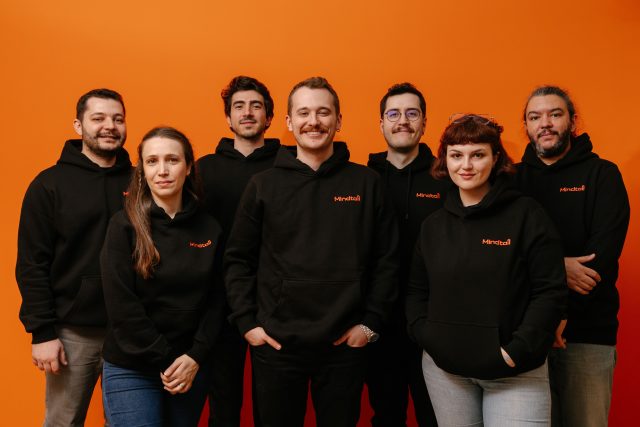
Mindtail, a mobile games studio in Istanbul, has completed a $2 million pre-seed funding round. APY Ventures led the investment, with Inveo Ventures and Ak Portföy GSYF participating.

The studio plans to spend the funds on hiring, building AI-based production infrastructure, and running early marketing tests. Mindtail is targeting a significant increase in team size over the near term. The studio’s debut title has not yet been made public but an announcement is expected soon.

A new model for making hybrid casual puzzle games

R. Tamer Özgen, Umut Yıldız, Sarper Karabağ, and Doğuşcan Öztürk founded Mindtail with a focus on hybrid casual puzzle games. The team builds using an AI-powered production model. The founders worked in product, growth, and development positions at Dream Games, King, Tactile, Ace Games, and Codeway. Their previous titles include Royal Match, Royal Kingdom, Lily’s Garden, Candy Crush Soda, and the Braindom series — games that have collectively reached hundreds of millions of users. Ece Özgüle serves as Art Director.

Keçeli: “Game production as a capital efficiency game”

APY Ventures Fund Manager Mustafa Keçeli said: “What sets Mindtail apart is a founding philosophy that views game-making not just as a creative discipline, but as a capital efficiency game — where economics, production architecture, and timing align. A team with critical roles in globally successful titles placing AI-native production at the core of the company’s DNA from day one turns the per-iteration economic disadvantage of a hit-driven category into an advantage.”

Inveo Ventures’ Haluk Nişli noted: “Mindtail’s track record of working together, depth in product and growth, and rapid prototyping culture reflect what differentiating studios need in this new era. We’re proud to be among the first investors to back this newly founded studio.”

Ak Portföy GSYF’s Hüseyin Çelik added: “Mindtail stands out with its internationally proven founding team and AI-driven production approach. Türkiye’s recent billion-dollar exits clearly demonstrate the ecosystem’s global potential, and we believe Mindtail will be a major player as the AI transformation accelerates.”

Özgen: “Aiming to set a new standard”

Mindtail Co-Founder and CEO R. Tamer Özgen said: “This round is the moment our collective experience materializes. We aim to combine what we’ve learned from products serving hundreds of millions of players with an AI-native production model to set a new standard in hybrid casual puzzle. We’ve also created a meaningful option pool for those joining us — founder-employee alignment from day one is a top priority.”

About Mindtail

An Istanbul-based mobile gaming studio building hybrid casual puzzle games with an AI-native production model.

Shaher Awartani’s Philanthropic Work: Private Scholarships and Support for Paediatric Healthcare

In Gulf business circles, philanthropy often takes the form of a formal corporate programme attached to a company’s public profile. For Shaher Moh’d Ali Awartani, the giving appears to come from a more personal place, expressed through sustained, multi-year commitments rather than public announcements.

Since 2015, Awartani has run a private scholarship programme supporting students who lack access to educational funding. Programmes structured outside public foundations and without press releases tend to reflect a more direct personal motivation than a standard corporate social responsibility framework does.

A Scholarship Programme Built on Quiet Consistency

Awartani’s private scholarship programme has provided educational funding to students who would not otherwise have access to higher education since 2015. The low public profile of the programme is consistent with a philanthropic approach that places weight on impact rather than visibility. That distinction carries some meaning in a region where corporate giving frequently serves a reputational purpose.

For an Abu Dhabi businessman with the range of connections Awartani has built — including partnerships with UAE ambassadors, sovereign wealth fund executives, and international healthcare institutions — the continuation of a quiet, unpublicised scholarship programme over more than a decade points to a genuine personal commitment to educational access.

Where Business and Philanthropy Meet

Awartani’s philanthropic activity connects to his investment work in ways that reflect a broader pattern in UAE business leadership. His partnerships with Mubadala Investment Company across ventures including Café Milano and Reem Hospital sit alongside his support for paediatric healthcare in Washington. Together they present a picture of an investor whose social commitments reach into the same institutional landscape his business operates in.

This combination of commercial activity and personal giving is characteristic of a generation of Gulf entrepreneurs who built their careers alongside the UAE’s own institutional development. For this group, commercial success and social contribution are not separate concerns but part of the same professional identity.