
Contributed content: this article was written by a third-party contributor and does not necessarily reflect the views of asb.org.uk. Editorial and Advertising Policy
Buying a replacement part for a car is usually a fairly simple calculation. The old one has failed, so you need another one. The question is where to get it and how much it is going to cost. There is another option that is easy to overlook: the part does not necessarily have to be new.
For many repairs, a suitable used component can do the same job. That is the business behind vehicle dismantling, and it explains why used car parts from breakers continue to have a place in the UK market.
Why would anyone reuse a car part?
The financial argument is probably the easiest one to understand. Some replacement components are relatively inexpensive. Others are not. An engine, gearbox, headlight, alloy wheel or electronic module can represent a sizeable part of a repair bill, particularly on a newer or higher-specification vehicle. If a suitable component has already been removed from another vehicle and is in good condition, buying it second-hand can make the repair considerably more affordable. There is also a supply argument. A part for an older model may no longer be readily available new, or the price of a new replacement may not make sense compared with the value of the vehicle. A breaker can sometimes provide a solution using a component that is already in circulation. That is particularly relevant for BMWs, where model variations and equipment levels mean that specialist knowledge can be useful when identifying the correct part.
A written-off car can still have plenty of value
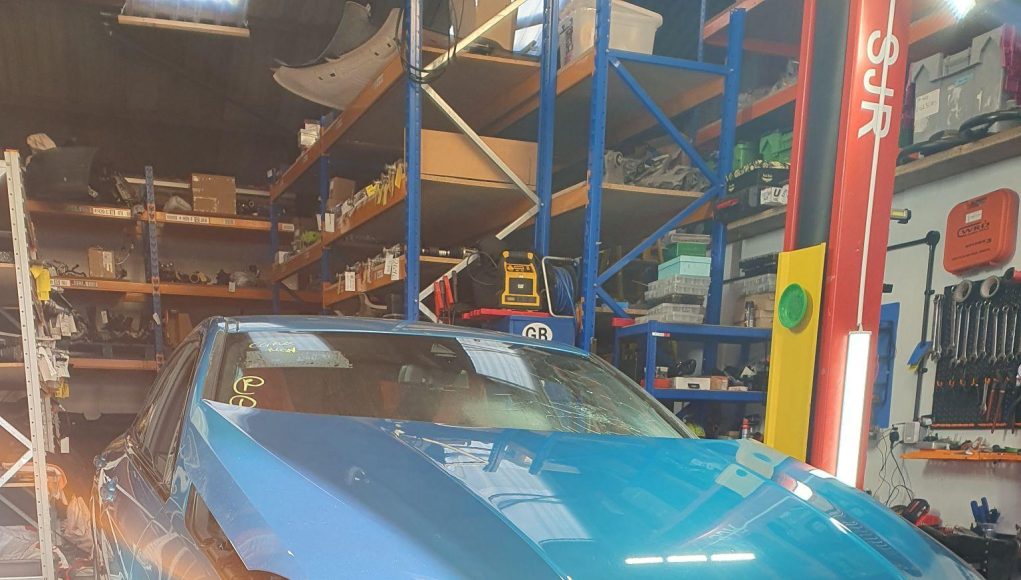
A vehicle does not have to be completely worn out before it reaches a breaker. Accident damage is a good example. A car may have suffered serious damage to one side or one end while other areas remain untouched. The engine might be fine. The gearbox might be fine. Interior components, wheels, suspension parts and electronics may all still be usable. Instead of treating the entire vehicle as one piece of waste, dismantling allows individual components to be assessed. The UK has specific rules covering end-of-life vehicles, including requirements around depollution, dismantling and the recovery, reuse and recycling of components. Authorised treatment facilities must also store recovered parts in a way that prevents damage. For a parts business, that means there is value in knowing what can be recovered and how it can be put to use again.
Reuse changes the economics of a repair
Suppose a BMW needs a replacement headlight. There may be several ways of approaching the repair: a new genuine component, an aftermarket alternative or a suitable used original. The right choice depends on the vehicle, the component, its condition and the owner’s budget. There is no rule saying that one option is always preferable. But used auto parts introduce another possibility into the calculation. Rather than paying for a newly manufactured component, the customer is buying something that has already been produced and is being used again. For a breaker, the business model works because the same vehicle can provide numerous saleable components. For the customer, the benefit is access to those components without necessarily paying new-part prices. It is a simple supply chain, but one that relies on getting the details right.
The part has to be suitable
This is where buying from a professional car breakers business differs from simply buying an old component from an unknown seller. A used part still needs to be the right part. BMW has produced numerous engines, transmissions and specifications across its model ranges, and components that appear identical can sometimes have different part numbers or applications. A registration number, VIN or original part number can help establish compatibility before an order is placed. Condition matters too. A supplier should be able to explain what is known about a component, particularly when dealing with expensive parts such as engines or gearboxes. The cheapest listing is not necessarily the cheapest repair if the part does not fit or has to be returned.
What about the environmental argument?
The environmental benefit is closely linked to the financial one. When a usable component is recovered and fitted to another vehicle, its useful life is extended. There is no need to immediately produce another equivalent component simply because the first vehicle it was installed in has been scrapped. That does not mean used parts have no environmental impact. They still need to be removed, tested where appropriate, stored and transported. But UK regulations specifically promote recovery, reuse and recycling from end-of-life vehicles, rather than treating every vehicle as a source of waste. The Environment Agency also requires permitted facilities to minimise residues and optimise reuse, recycling and recovery where technically and economically practical.
Finding the right supplier
For someone searching for car parts, the nearest breaker is an obvious place to start. But location is not necessarily the most important consideration. A specialist supplier with the right stock may be able to identify and send the required component without the customer having to visit a physical yard.
MT Auto Parts, based in South Yorkshire, specialises in BMW parts and supplies used components including engines, gearboxes, body panels, lighting, suspension and interior parts. For an owner looking for a replacement, the useful part of the service is not simply having a large stock of components; it is being able to identify which one is appropriate for the particular BMW.
Reuse is a practical business model
There is nothing particularly complicated about the principle. A vehicle reaches the end of its useful life, but its individual components do not necessarily reach the end of theirs.
The breaker creates a market for those components. The customer gets another option when repairing a vehicle. Materials that cannot be reused can then move into recycling or appropriate recovery routes, with regulated facilities required to manage end-of-life vehicles correctly.
For businesses such as MT Auto Parts, that makes used parts more than a cheaper alternative. They are the basis of a working supply chain built around getting more use from components that already exist. And for the customer, that can be a compelling reason to check the used market before automatically assuming that every replacement needs to be brand new.